
The Art of de GRISOGONO
Creation 1
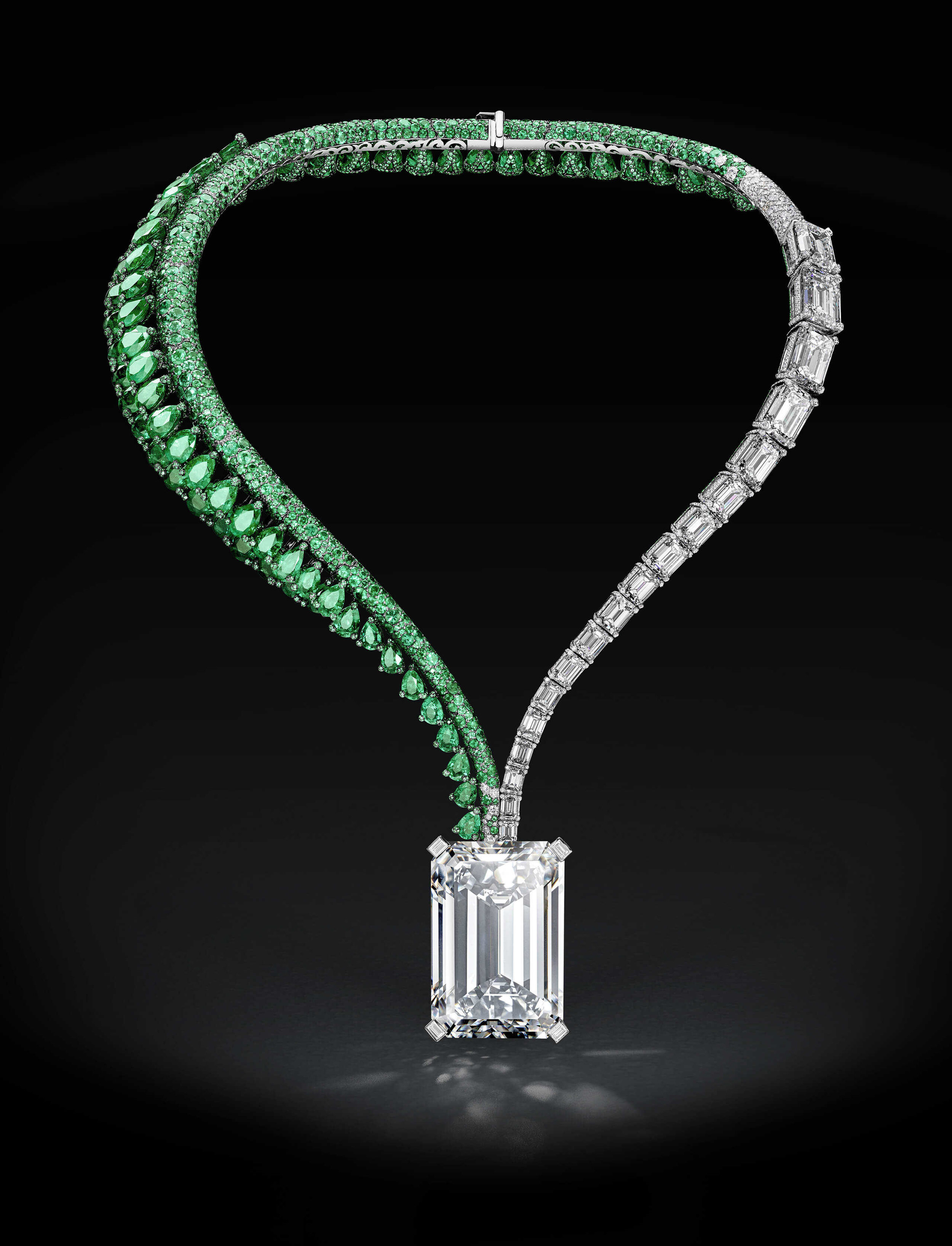
de GRISOGONO proudly presents an asymmetric necklace starring the 163.41-carat diamond as its centrepiece. The magnificent gem is framed to the left by 18 emerald-cut diamonds, and to the right by two rows of pear-shaped emeralds set against a darkened gold background creating the Maison’s signature chiaroscuro effect.


BLUE AND WHITE EWER YONGZHENG SEAL MARK AND PERIOD

This exceptionally rare and elegant ewer represents the height of early Qing porcelain production at the imperial kilns at Jingdezhen in Jiangxi province. Made during the reign of the Yongzheng emperor, it illustrates the emperor’s pursuit of innovative designs and forms as well as the replication of historical masterpieces as a reminder of the nation’s glorious past. Such developments were realized through the exceptional talent and creativity of potters working under the instruction of Tang Ying (1682-1756), the most accomplished superintendent at Jingdezhen during the early Qing period.
The distinctive form of this ewer is likely derived from European or Middle Eastern metalwork, although the model on which is was based is still to be identified. Whilst its intended purpose is also unknown, this form is known as huajiao or flower watering jug, although the shape is equally well suited to pouring wine. The form clearly found favor with the Yongzheng emperor, as a range of examples, both with and without handles, can be found in blue and white as well as with monochrome glazes.
Compare a closely related ewer of the same form and design in the Palace Museum, Beijing, illustrated in Gugong Bowuyuan cang. Qing dai yuyao ciqi [Porcelains from the Qing dynasty imperial kilns in the Palace Museum collection], vol. II, Beijing, 2005, pl. 44 (fig. 1); and two closely related handled ewers, also in the Beijing Palace Museum, the first with scattered floral sprays encircling the bulbous middle section of the neck, illustrated in The Complete Collection of Treasures of the Palace Museum. Blue and White Porcelain with Underglaze Red, vol. 3, Hong Kong, 2000, pl. 109; the other with a floret scroll band at the neck, illustrated in Gugong Bowuyuan cang. op. cit., pl. 43. Further related examples include one sold in our Hong Kong rooms, 26th October 1993, lot 169 and illustrated in Imperial Perfection. The Palace Porcelain of Three Chinese Emperors. A Selection from the Wang Xing Lou Collection, Hong Kong, 2004, pl. 8, and another, formerly in an English private collection, sold at Christie's London, 7th November 2006, lot 196.
For examples applied with a white glaze, see one formerly in the collections of Sir Harry Garner and Edward T. Chow, illustrated in Regina Krahl, Chinese Ceramics from the Meiyintang Collection, vol. II, London, 1994, pl. 794, and another in the Grandidier Collection in the Musée Guimet in Paris, illustrated in Oriental Ceramics. The World's Greatest Collections. Musée Guimet, vol. 7, Tokyo, 1982, pl. 170; and a third in the Palace Museum illustrated in Gugong Bowuyuan cang. op. cit. pl. 90.
A handled example applied with a flambé glaze, also in the Qing court collection, is illustrated in op. cit, pl. 143; another was sold in our Hong Kong rooms, 21st March 1979, lot 101. A ewer of this form but applied with a teadust glaze is illustrated in The Complete Collection of Treasures of the Palace Museum. Monochrome Porcelain, Hong Kong, 1999, pl. 244. A number of incised celadon-glazed ewers of similar form have been sold at auction, including one with a handle, sold in our Hong Kong rooms, 20th May 1980, lot 80; and one without a handle, sold in these rooms, 15th June 1983, lot 316, and later at Christie's Hong Kong, 28th November 2005, lot 1312.
Among the most distinctive features of this group of ewers are the bands of molded chrysanthemum petals encircling the lower body and shoulder. Porcelain wares inspired by the multi-layered petals of chrysanthemum flowers were a particular innovation of the Yongzheng period, as evidenced by a number of dishes, bowls and teapots in chrysanthemum form. In her article 'In the Path of Tao Qian: "Chrysanthemum" Wares of the Yongzheng Emperor', Arts of Asia, May-June 2015, pp 72-85, Hajni Elias expands on the symbolic associations of the chrysanthemum flower and the close associations with one of China's most famous poets, Tao Qian (365–427). Retiring from his official position in 405, during the tumultuous Six Dynasties period (222-589), Tao Qian spent a quiet life tending to his chrysanthemums and writing poetry. A painting formerly in the Qing court collection, and therefore likely treasured by the Yongzheng emperor, entitled Scholar of the Eastern Fence, by the early 13th century court artist Liang Kai (circa 1140-1210), shows Tao Qian in a landscape, holding a chrysanthemum flower in his hand. The Yongzheng emperor was a devout Daoist and the imagery of Tao Qian's decision to spend his life contemplating nature, and his direct association with the chrysanthemum flower, would have no doubt resonated with him and may have served as inspiration for commissioning the manufacture of chrysanthemum-form porcelain wares.
Adrian Ghenie - THE SECOND PRESENTATION ROOM
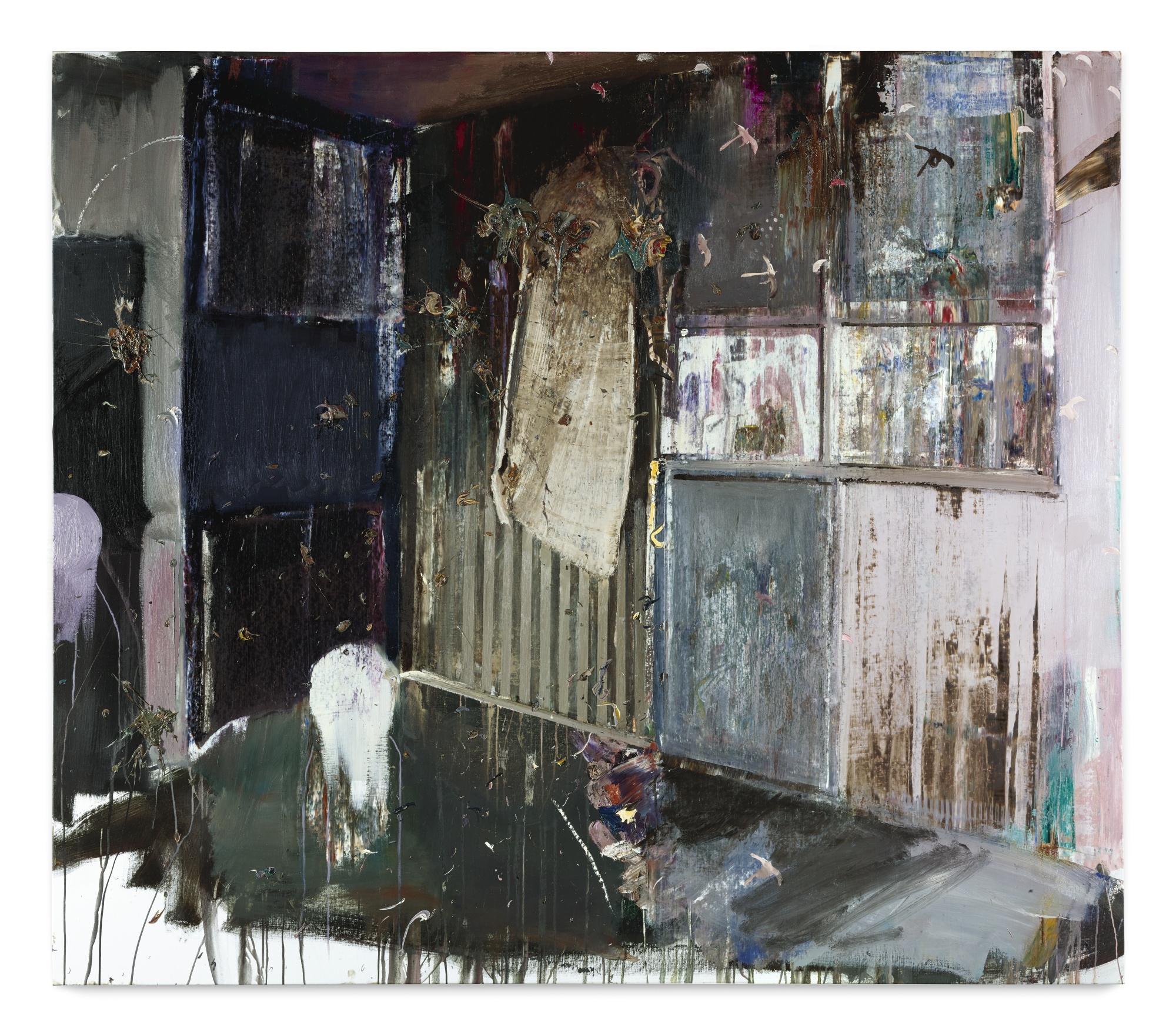
Inside Adrian Ghenie’s shadowed room, forces of brutality and beauty coexist. There is riveting painterly evidence of Ghenie’s physical assault on the canvas, where he has attacked the surface with loaded pigment using his palette knife to carve sensuous arenas of visual expression. On the richly textured surface, there are breathtaking accretions of color, startling chromatic contrasts, and textural flourishes rendered with extraordinary intensity. Drawing upon Baroque chiaroscuro, Ghenie's monumental 2011 painting The Second Presentation Room is cloaked in theatrical immanence and claustrophobia, heightened through the sumptuous passages of inky purple, dark olive green, and burnt crimson. A bold testament to Ghenie’s celebrated mastery of spatial composition, seductive textural quality, and compelling visual appropriation of allegorical historical references, The Second Presentation Room exposes the apotheosis of the artist’s creative genius.
The direct source employed by Ghenie for The Second Presentation Room is El Lissitzky’s Kabinett der Abstrakten, the Russian Constructivist's installation room conceived in 1928 for the Landesmuseum in Hannover. Lissitsky’s Abstract Cabinet represented the modular, organized theoretical framework of Constructivism, which called for a new form of art in the service of social revolution. As first espoused by Vladimir Tatlin in 1913, Constructivism rejected the autonomy of art and cultivated a method of thought that fused art and industrial functionality. Such fusion is clearly articulated by Lissitzky’s visually integrated presentation room, which emphasized the immaculate organization of space and the unadulterated purity of all art contained within that space. Appropriating Lissitzky’s iconic room, Adrian Ghenie interrogates the hopeful ideology of the fledgling socialist revolution. As Mark Gisbourne writes, “The pristine world of utopian constructivist ideas of clarity and definition have been despoiled and violated; a sort of Baroque ruination and set of surface accretions have taken their place. But it is intended less by the artist as a banal commentary on the lost utopian hopes of a revolutionary modernism, but rather on the claustrophobic nature and eventual material stasis that inevitably flow from preordained ideologies.” (Mark Gisbourne, “Baroque Decisions: the Inflected World of Adrian Ghenie” in Juerg Judin, Adrian Ghenie, Ostfildern, 2014, p. 28)
In Adrian Ghenie's childhood, Romania was ruled by Nicolae Ceaușescu’s tyrannical Communist regime; a period of severe political oppression and unrest that has significantly informed Ghenie's work. The Second Presentation Room discloses Ghenie’s personal history through aesthetic reference to his acute sensory memories from childhood, characterized by “the dirty and grubby surface textures of his father’s garage and cellar, his grandmother’s roof and garden, or his brother’s garage containing various detritus.” As Gisbourne observes, Ghenie first saw these spaces as “messy and untidy but texture-laden surroundings of shabby objects, broken furniture, rotting food and apples...yet they have come in retrospect to summarize in his mind a certain perception of his childhood.” (Ibid., p. 29) In the present work, Ghenie fuses aspects of his personal history with events from national history. Although he borrows from Lissitzky and from his private memories in order to interpret--or make sense of--the collective public history to which he belongs, in the end Ghenie constructs something far more powerful than the historical referent or his intimate personal consciousness. Ultimately, Ghenie conceives The Second Presentation Room on the basis of past realities, blending both ‘public’ and ‘private’ histories together, and then distorting these realities through the lens of his own fictive imagination. Conceived through Ghenie’s tactic of distortion, there is a palpable tension manifest in the present work between the real and the imaginative. Ghenie articulates this dichotomy through the oscillating spillages of representation and abstraction, fomenting a narrative that revises and even fabricates what we know to be real.
In the shifting perspectival planes of the present work, areas of recognizable imagery yield to swathes of pure abstraction. Deploying a wild gestural abandon through cyclical overpainting and excavation, Ghenie constructs a claustrophobic aura that underscores the metaphorical significance of the enclosed room. In the present work, the room not only functions as the physical setting, but a psychologically-inflected room of haunting human memory. Rather than alluding to a world beyond, The Second Presentation Room is a self-engendered entity, a cavernous emblem of the enveloped psyche. Vandalized, fragmented, and broken, the room capitulates and gives in to itself, subsiding and crashing into the picture plane like the collapsed ideology of a once-hopeful social revolution. It is this quality of self-effacement and visceral power, as rooted in both historical and personal reference, that renders The Second Presentation Room one of the most poignant works in Ghenie’s oeuvre to date.
McClean Design- Hillcrest



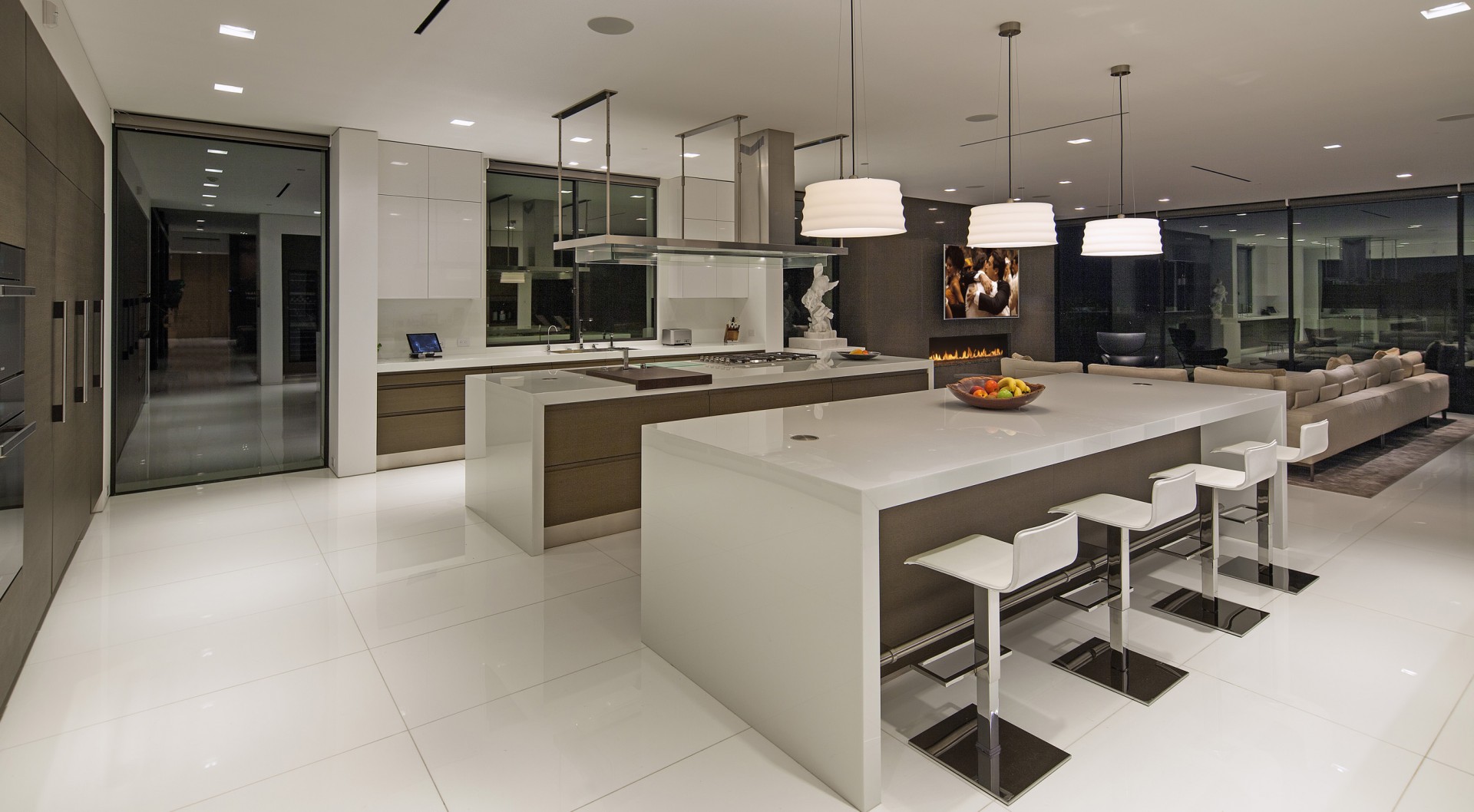
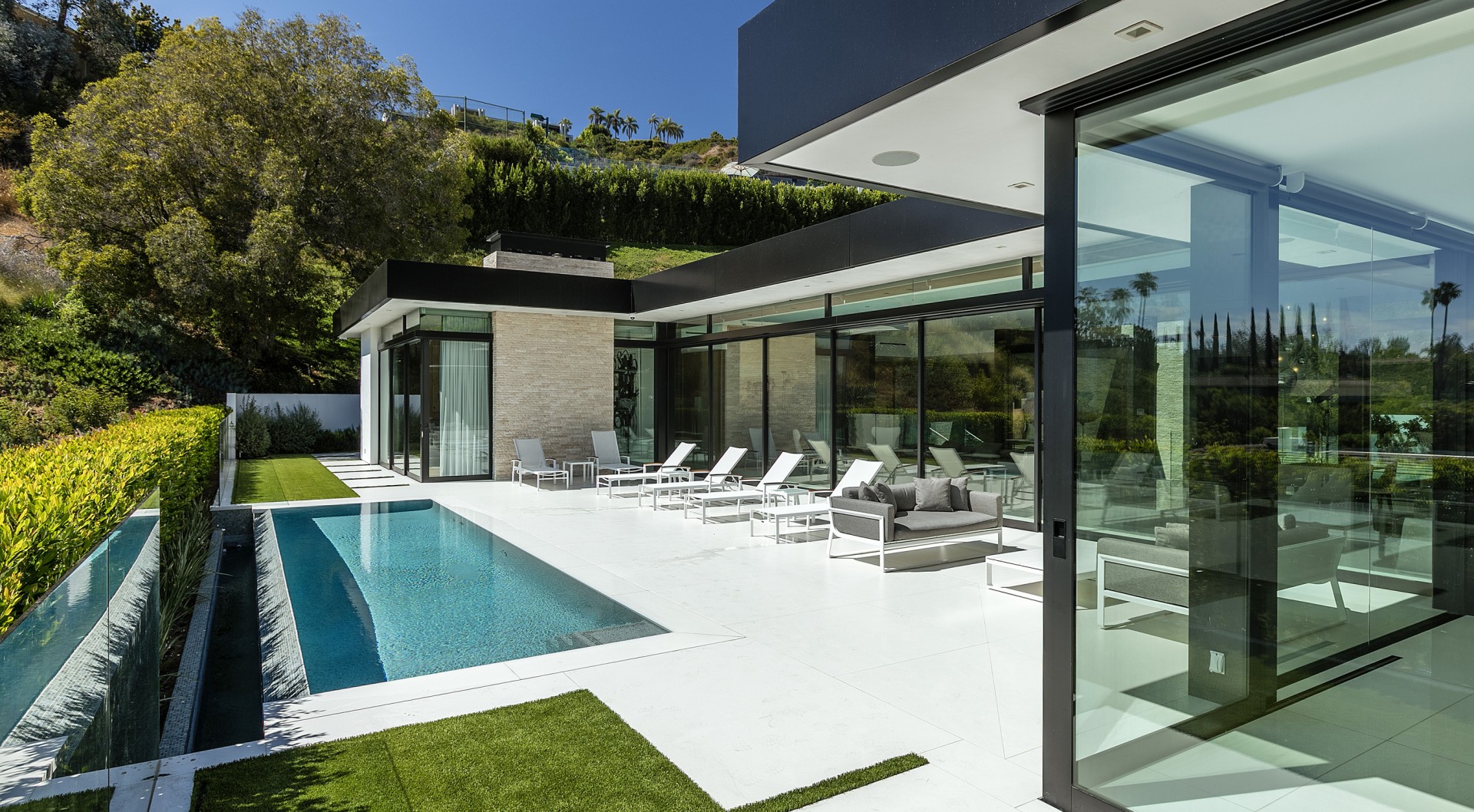


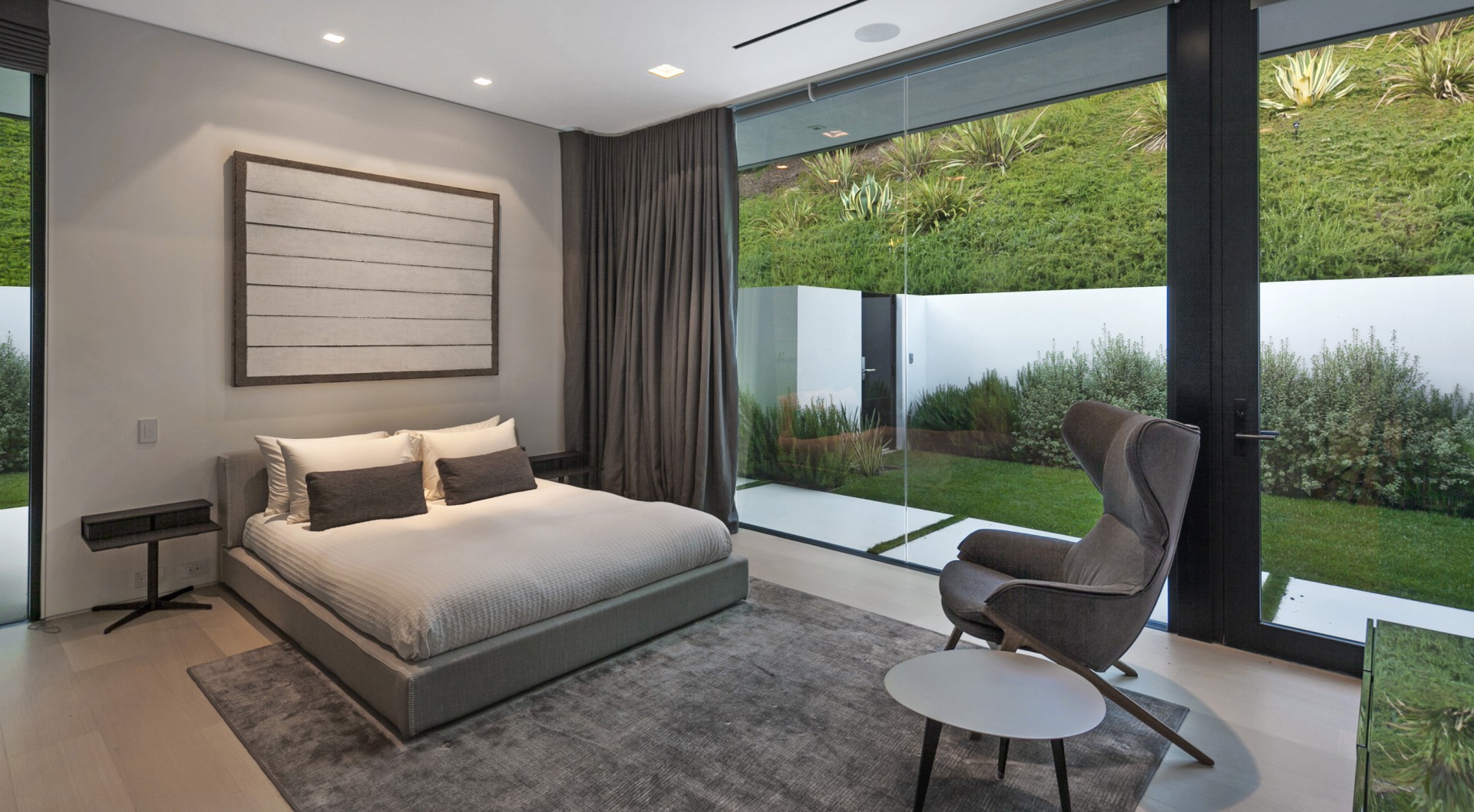


Hillcrest
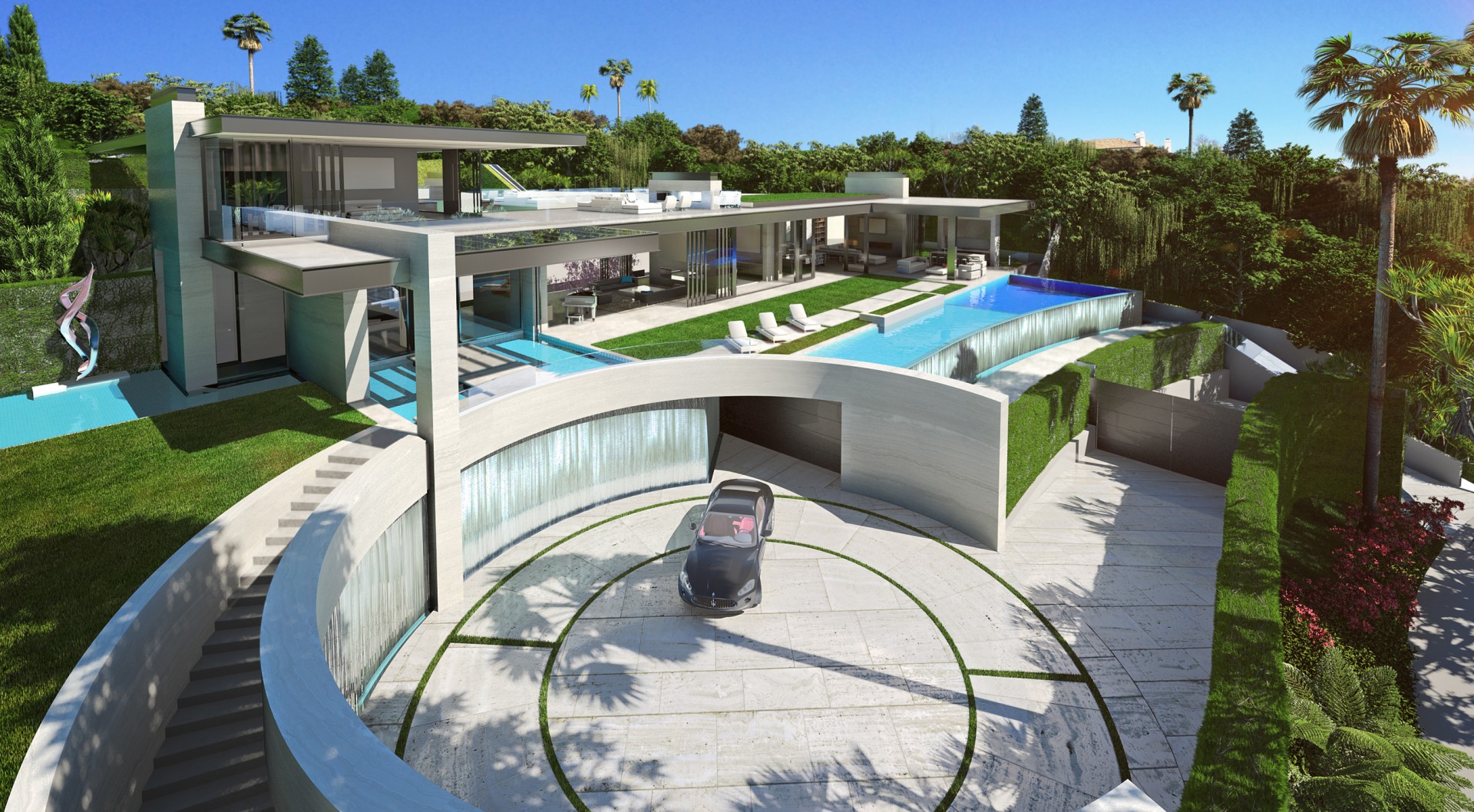
This hillside home is located in Trousdale, Beverly Hills a neighborhood of single story homes famed for their views and movie stars. Our clients wanted an extensive basement level to provide entertaining spaces due to the limited options above grade. Our challenge was to find a way to get light to these spaces since the design would need to consist of a true basement. We took the concept of a light well and expanded it to create a true water garden located in the middle of the house allowing us to create a dramatic glass bridge entry to the home. The bridge is a unique experience changing the user’s perception as they leave the garden behind and enter the house. The water garden below dapples light throughout the basement making these spaces amongst the most interesting within the house contrasting with the view orientated rooms above. The house is fused with natural light throughout and a warm palette of natural materials creates a very comfortable living environment.
Photographer: Jim Bartsch
LocationBeverly Hills, CA
Project TypeNew Single Family Residence
Approximate size 10,000 sf
Completion dated august 2016
Engineer Habib Soleymani
Jean-Michel Basquiat- SANTO 4

“The work Basquiat began in late 1982 signaled a new phase of intensity and complexity that focused on black subjects and social inequities and incorporates a growing vocabulary of popular images and characters…The effect was raw, askew, handmade—a primitive-looking object that recalled African shields, Polynesian navigation devices, Spanish devotional objects, and bones that have broken through the surface skin.” (Richard Marshall, “Repelling Ghosts,” in Exh. Cat., Malaga, Palacio Episcopal de Malaga, Jean-Michel Basquiat, 1996, p. 140)
Emblazoned with frenzied, gestural marks and urgent annotations that reflect the spontaneity of graffiti, Santo 4 is a significant milestone in the inauguration of Basquiat’s certified status as an international art star. It is universally acknowledged that 1982 was the most significant year in the artist's tragically short yet enduringly prolific career. Painted in this seminal moment and belonging to a small number of captivating works created on roughly hewn canvas supports, Santo 4 is a preeminent articulation of Basquiat’s expressionistic force, adept combination of cultural references and impactful iconography.
Created the year after Basquiat’s breakthrough participation in the now-legendary New York/New Wave exhibition at the P.S.1 Contemporary Art Centre, Santo 4 is the perfect encapsulation of the artist’s transition from street to studio. Whilst self-organized exhibitions such as the Lower Manhattan Drawing Show at the Mudd Club gave crucial exposure for the artist, his breakthrough participation in the P.S.1 show and success in the show Public Address at the Annina Nosei Gallery gave him the critical success that was to bring about a huge turning point in his career. Indeed, it was in this year that Nosei became Basquiat's primary dealer and staged a critically acclaimed solo show of the artist's work. Using Nosei's Prince Street gallery basement as his studio, Basquiat forged influential links with Bruno Bischofberger and Larry Gagosian. Subsequently, his rise to stardom was astoundingly accelerated: exhibited alongside Gerhard Richter, Joseph Beuys, and Cy Twombly he became the youngest artist to have ever participated in Documenta in Kassel, heralding 1982 as the definitive year in his sudden yet pervasive invasion of the art world. Looking back on this astonishing year, Basquiat recalled, "I made the best paintings ever." (Jean-Michel Basquiat cited in Richard Marshall and Jean-Louis Prat, Jean-Michel Basquiat, Paris 2000, p. 202)
Not only did 1982 bring about extraordinary critical success for Basquiat, it also saw the birth of a celebrated corpus of works stretched over jutting corner supports and exposed stretcher bars. Basquiat and his assistant at the time set about crafting stretchers and frames out of a whole host of found materials such as carpet tacks, rope, canvas and wooden mouldings. Insouciant and purposefully rudimentary, these structures physically dismantle and imbue the grand tradition of painting on canvas with the tribal and primitive, while also referencing a grander art historical tradition of assemblage and collage most influentially advanced in postwar American art by figures such as Robert Rauschenberg.
While the evocation of primitive art very much alludes to Basquiat’s ethnic heritage - born to Puerto Rican and Haitian parents and brought up in Brooklyn, Basquiat's art habitually draws on his triangular cultural inheritance – the artist was also intensely influenced by Picasso for whom primitivism was an antidote to the conservatism of the academies. Similarly, Basquiat finds in primitivism a correlative mode for expressing an overtly contemporary angst simultaneously tied to his own racial identity and his position as an artist responding to the cool minimalism that permeated the gallery scene in Manhattan during the early 1980s.
Dominated by a large skeletal figure surrounded by a medley of scribbled marks and scrawled annotations – emblematic of Basquiat's polemic urban iconography – Santo 4 is demonstrative of the very best of the artist’s celebrated practice. His use of the iconic skeleton motif is both formally and symbolically crucial. Whilst the skull acutely references modernist abstraction and Picasso’s engagement with African art, it also engages with Basquiat’s own identity as a black subject seeking expression within a seemingly ‘white-washed’ art world. As surmised by cultural theorist Dick Hebidge "… in the reduction of line into its strongest, most primary inscriptions, in that peeling of the skin back to the bone, Basquiat did us all a service by uncovering (and recapitulating) the history of his own construction as a black American male." (Dick Hebidge, ‘Welcome to the Terrordome: Jean-Michel Basquiat and the Dark Side of Hybridity’, in Exh. Cat., New York, Whitney Museum of American Art, Jean-Michel Basquiat, 1993, p. 65) Reduced to its skeletal framework the figure also purports Basquiat’s scientific interest in the anatomical makeup of human beings, a subject that had fascinated the artist from an early age. His mother gave him a copy of Grays Anatomy, when, after being hit by a car at the age of seven, he spent a month recovering in hospital. The anecdotal genesis of this interest was further substantiated when Basquiat discovered Leonardo da Vinci's pioneering studies of the human body. Furthermore, the rich assemblage of caricatured faces, arrows and scribbled phrases, which include a childlike sketch of an airplane in the left centre of the composition, recalls the urban iconography of the artist's SAMO days. Ubiquitous to the metropolitan environment of New York, crudely articulated images of cars and planes recur throughout his early work. Along with the words Tokyo, South Korea and Peking, the plane contributes to the global mood that pervades the present work and concurrently symbolises the artist’s growing international success.
Rife with Basquiat’s rich, multi-faceted iconography, Santo 4 imports a dense narrative steeped in symbolic potency. Belonging to Basquiat’s trailblazing group of stretcher paintings, it reflects the nascent global excitement surrounding the artist at the time and acts as a bold proclamation of his inauguration into art history. Rene Ricard, one of the artist’s most notorious critics, singled out this revolutionary body of work and proclaimed: “For a while it looked as if the very early stuff was primo, but no longer. He’s finally figured out a way to make a stretcher… that is so consistent with the imagery… they do look like signs, but signs for a product modern civilisation has no use for.” (Rene Ricard cited in Phoebe Hoban, Basquiat: A Quick Killing in Art, London 2008, p. 105)

2001 Bond Melbury
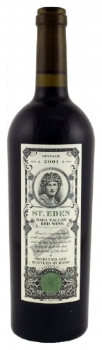
Bond is an Oakville, California, winery that makes widely acclaimed single-vineyard Cabernet Sauvignons based on an unusual business model. Founded in the late 1990s by H. William Harlan, who in 1984 founded Harlan Estate, Bond uses grapes from five vineyards that Harlan does not own. The winery refers to its offerings as “a portfolio of wines that are diverse in their geographic representation…” The name Bond was selected to highlight the “bond” between Harlan, his winemaking team, which includes his longtime associate Robert Levy, director of winegrowing, and the independent growers who supply the grapes. Each of the “grand crus,” as Harlan calls his Bond wines, has been given a proprietary name, such as Vecina and Melbury, meaning that although the goal is to make Cabernet Sauvignons using only single vineyard grapes, Bond reserves the right to blend if necessary. Besides the “grand crus” Bond makes Matriarch, a second wine. The vineyards Bond leases are 7 to 10 acres each.
Hôtel de Crillon

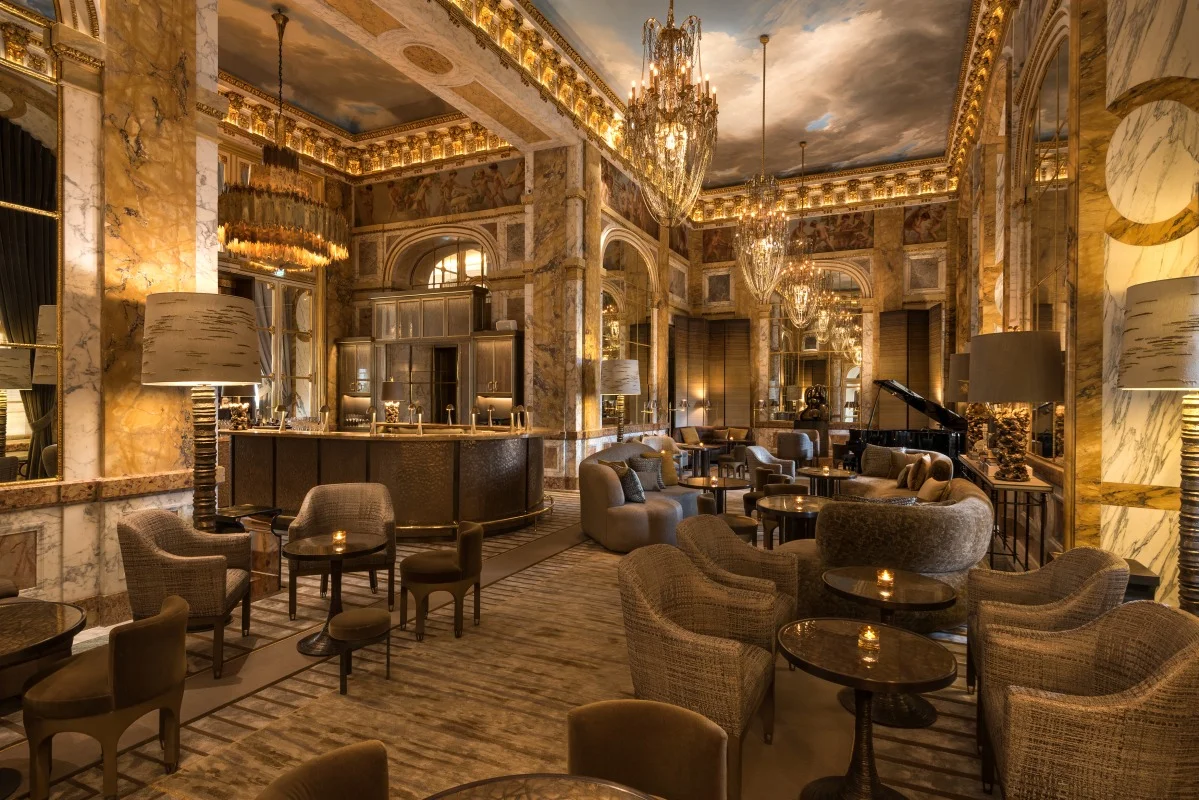


Reopening in 2017, Hôtel de Crillon, A Rosewood Hotel offers a delicate balance between conservation and transformation - a celebration of the spirit of Paris and French art de vivre. The legendary palace enjoys unrivalled position overlooking Place de la Concorde, minutes away from the city’s most iconic sites.
FLAMBE-GLAZED VASE QIANLONG SEAL MARK AND PERIOD

This rare vase is remarkable for its vibrant hues of ruby streaked with lavender, created in imitation of the celebrated Jun wares of the Song period. By the Qing dynasty, Jun wares were regarded as objects of admiration at court as well as amongst literati connoisseurs and wealthy merchant collectors. The Yongzheng and Qianlong emperors sought to reproduce the beautiful glaze effects and graceful forms of Jun wares by commissioning copies from the imperial workshops at Jingdezhen. The streaks characteristic of this glaze are known as yaobian (‘transmutation glaze’).
Vases of this type are rare and only a small number of related examples are known. Compare one, formerly in the collection of the Rt. Hon. Lord Hollenden, sold in our London rooms, 27th November 1973, lot 349. Another, acquired from Yamanaka & Co. Beijing, in 1919, was sold at Christie's London, 9th November 2010, lot 218.
Vases of this form are also recorded in other monochrome glazes, evocative of Song dynasty wares. Compare a number of Qianlong mark and period Ge-type vases, including one illustrated in Regina Krahl, Chinese Ceramics from the Meiyintang Collection, vol. 2, London, 1994, pl. 877; Compare a similar vase sold in our London rooms, 10th June 1986, lot 291, and again in our Hong Kong rooms, 20th May 1987, lot 519. A third example was first sold in our London rooms, 12th July 2006, lot 134, and again in the same rooms, 16th September 2009, lot 217.